
Responsible Gambling in the UK: Signs and Support
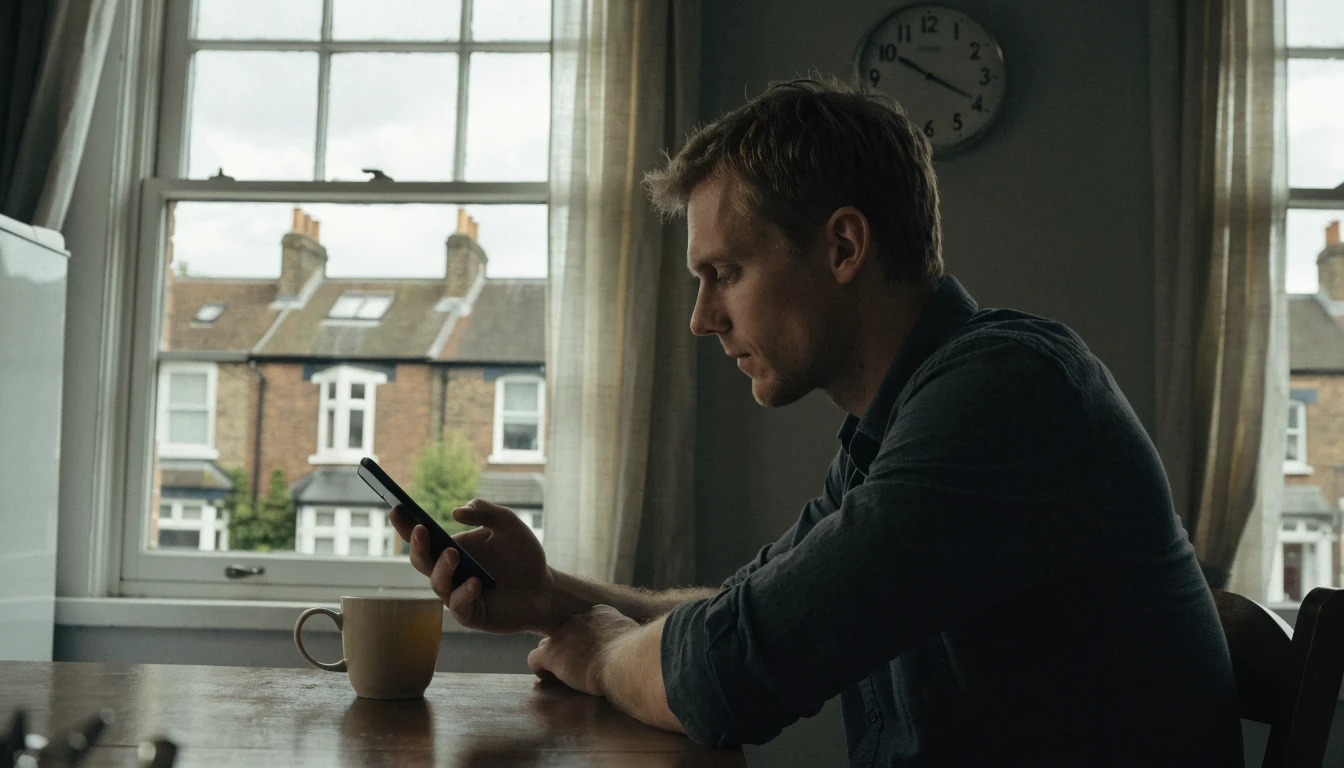
Gambling in the United Kingdom is a regulated commercial activity. It is paid entertainment, priced through odds and a built-in house edge. Over any long horizon, the operator’s margin holds; the player’s expected return does not. This page sets out how problem gambling shows up in observable behaviour, which limits the UK market provides, and where help can be reached — with names, numbers, and links, not slogans.
How Problem Gambling Looks From the Outside
General warnings — "gamble responsibly", "know when to stop" — describe nothing. Problem gambling has specific, checkable markers:
- Chasing losses. Deposits increase after losing sessions, on the reasoning that a win will recover the balance. Arithmetic works the other way: a larger deposit in a negative-expectation game raises the expected loss, not the recovery.
- Borrowed stakes. Play funded by credit, loans, or money diverted from fixed obligations — rent, bills, repayments.
- Session creep. Planned 30-minute sessions becoming multi-hour ones, with reality-check prompts repeatedly dismissed.
- Concealment. Hiding statements, deposits, or time spent gambling from a partner or family member.
- Withdrawal of the limit. Deposit limits set and then raised, or never set at all when the operator prompts for one.
- Emotional pattern. Irritability when unable to play; gambling framed as relief from stress rather than entertainment.
One marker is a data point. Several recurring together are a pattern with a balance attached.
Why Gambling Is Not Income
A slot machine with a £5 per spin limit (the ceiling for players aged 25 and over since 9 April 2025) and a negative return-to-player percentage produces a predictable result over volume: the player funds the difference. A "strategy" of recovering £500 through further play is not a plan; it is a second bet with the same margin, larger stake. Gambling cannot close a budget gap, because the gap is what it charges for. Anyone treating gambling as a route out of financial difficulty is compounding the original problem at the house edge.
Age Restriction
The legal gambling age in the UK is 18. No form of gambling is legal under the age of 16, and parental permission does not override this. Operators licensed by the UK Gambling Commission (UKGC) must enforce strict age control, and applicants for a UKGC licence must themselves be 18 or over.
Licence Check Before Anything Else
Operators must hold a UKGC licence to advertise to or take bets from consumers in England, Wales, or Scotland. Operating without one is a criminal offence. Before depositing anywhere, verify the operator: the UKGC maintains a public register of current operating and personal licences. Match the operator’s name or licence number against that register and confirm the listed domain matches the site being used. The check takes under two minutes and filters out every unregulated operator at once.
Self-Restriction Tools Available on the UK Market
UK licensees are required to provide a standard set of controls. None of them work unless they are actually set.
- Deposit limits. Operators must prompt players to set a deposit limit before the first deposit. Setting it later is possible; setting it before any money moves is the version with no losses to cap retrospectively.
- Loss limits, session time limits, and reality checks. All mandatory features of UK-licensed platforms.
- Self-exclusion at operator level. Minimum six months for remote operators; individual casino-level exclusions can range from one day to permanent. All gambling businesses must run their own self-exclusion procedures.
- GAMSTOP. Since March 2020, participation is mandatory for all online gambling operators licensed in the UK. One request excludes a player from every UKGC-licensed online site for six months, one year, or five years — the choice of period is made once, and it applies everywhere. Details at https://www.gamstop.co.uk.
Additional market protections worth knowing: operators may not accept payment by credit card — including through an e-wallet funded by credit — and may not accept e-wallet payments unless the provider can demonstrably block credit-card use. From 28 February 2025, remote operators must run light-touch financial vulnerability checks on customers with net deposits of £150 or more in a rolling 30-day period. Players must be able to stop playing at any time and retain their remaining deposit and winnings earned from it.
Where to Get Help
This is the working part of the page. These services exist, are free, and in the case of the helplines operate around the clock.
- National Gambling Helpline — 0808 8020 133 for England and Scotland; free, available 24 hours a day, 7 days a week. Operated by GamCare. https://www.nationalgamblinghelpline.org.uk
- Wales helpline — 0808 2819 265, free and available 24/7. NHS Wales Helplines: https://www.wales.nhs.uk/services/mental-health/addiction-services
- GamCare — information, support, and treatment pathways. https://www.gamcare.org.uk
- National Gambling Treatment Service — structured treatment for gambling-related harm. https://www.nationalgamblingtreatment.org.uk
- GambleAware — information on gambling risks and routes into support. https://www.gambleaware.org
- GAMSTOP — the national online self-exclusion scheme. https://www.gamstop.co.uk
A helpline call is free and does not commit anyone to a programme. The one action that reliably stops further losses while a decision is being considered is GAMSTOP registration: one request, every licensed UK site, six months minimum, with no opt-out during the chosen period.
The Sum at the Bottom
Gambling is a cost, not an income stream. The controls above — deposit limits, exclusion schemes, licence verification — are the market’s own mechanisms for keeping that cost capped. Where the cap has already failed, the helpline numbers above are the entry point. Questions about this page can be directed to [email protected].